About Us
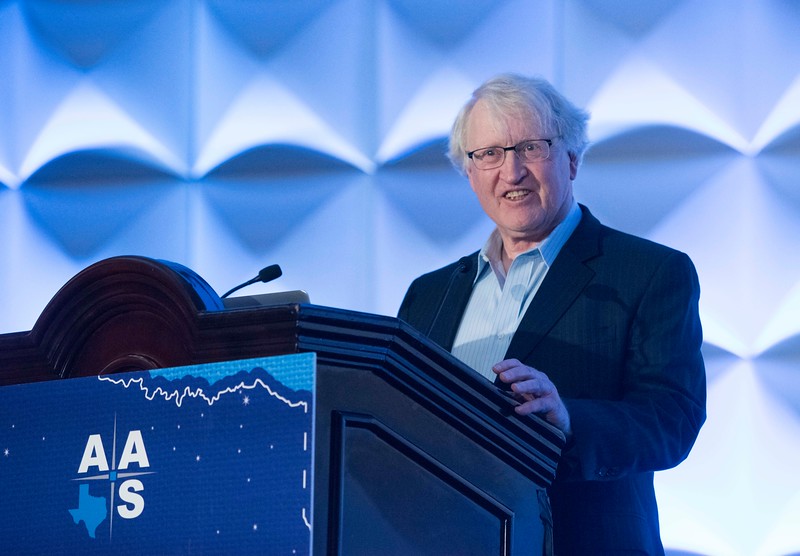
Garth Illingworth
Garth Illingworth's primary research interests are directed toward understanding when and how galaxies formed. To this end he has studied the structure, kinematics, and stellar populations of nearby elliptical and SO galaxies with the goal of inferring how they were built up in the distant past ("galaxy archeology"). When HST (the Hubble Space Telescope) was launched and the Keck 10-meter telescopes became available, he could directly look at the buildup of galaxies at early times in the life of the universe (using the astronomer's "time machines"). He was deputy Principal Investigator on the Advanced Camera for HST that was launched in 2002 and put onto Hubble by the astronauts during their last, wonderfully successful repair mission to Hubble. This camera has brought us remarkable views of the universe. By using this camera, along with an excellent group of collaborators and postdocs and students, he has been able to view directly galaxies within the first billion years of the Big Bang - looking back in time over 12 billion years. In two recent papers led by postdoc Bouwens the first detections and good limits were placed on galaxies at redshifts 7-10, or looking back over 13 billion years to within 400-600 million years of the Big Bang.
Illingworth is the former chair of the Astronomy and Astrophysics Advisory Committee (AAAC). The AAAC offers advice to Congress and NSF, NASA and DOE on the implementation of the science program developed by the astronomy science community through studies carried out by the National Academy of Sciences.
more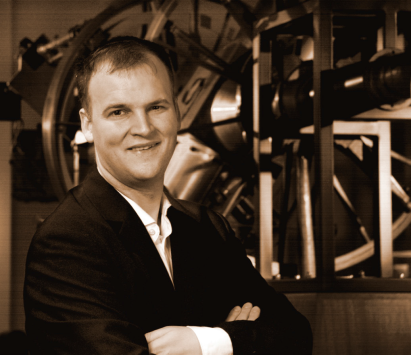
Rychard Bouwens
Rychard is an Associate Professor at the University of Leiden and studies the formation and evolution of galaxies through cosmic time. His current focus has been the evolution of galaxies during the first two billion years of the universe (z~3-10), as described here He conducts his studies using data from the Hubble Space Telescope, the Spitzer Space Telescope, and large ground-based telescopes like Keck, Subaru, or VLT. His work has primarily centered on the determination of the UV LFs from z~8 to z~4, but has also been investigating the sizes, surface brightnesses, UV colours, dust content, and correlation properties of galaxies at these early times. Rychard did his Ph.D at UC Berkeley under the supervision of Joe Silk and Tom Broadhurst (see here and here). Together with other members of the XDF team, he has broken the record for most distant galaxy numerous times. In 2013, he was awarded the Pastoor Schmeitsprijs voor de Sterrenkunde, a prize in the Netherlands given to the researcher (under the age of 40) judged to have made the most significant contribution to astronomy. Rychard also has an excellent track record in being awarded funding. He is published in Nature five times as first or second author, including in a recent Nature News & Views).
more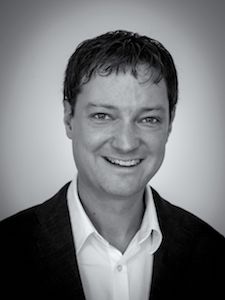
Pascal Oesch
Pascal is currently an assistant professor at the University of Geneva leading the research group "Galaxy Build-up at Cosmic Dawn". You can find all the details of that group here. We are working with extremely deep Hubble and Spitzer Space Telescope data as well as with submillimeter facilities to study galaxy evolution across cosmic time. In particular, my research is focused on understanding the build-up and assembly of the first generations of galaxies.
more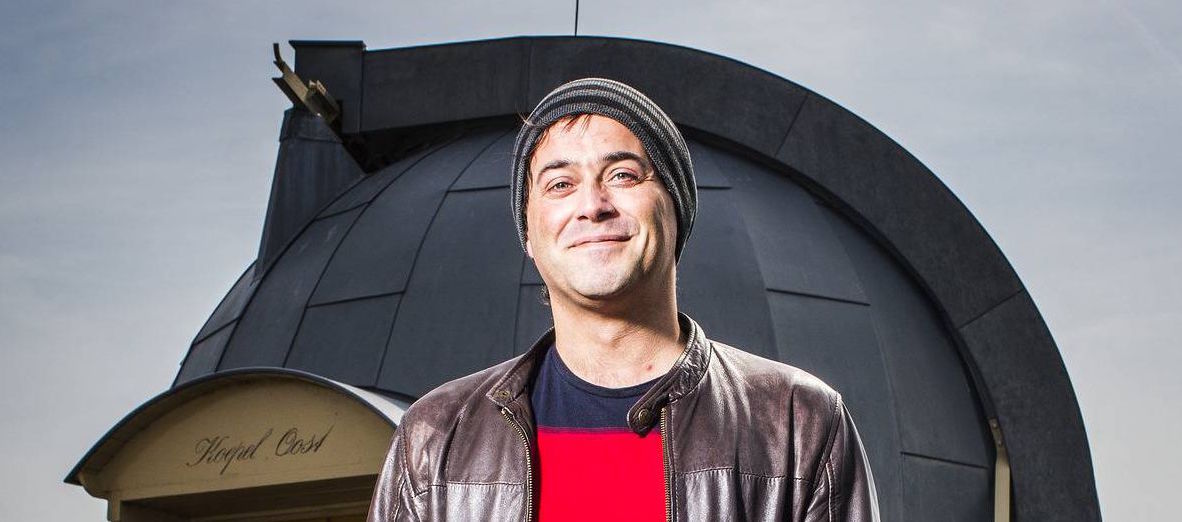
Ivo Labbé
Ivo is a research assistant professor at Leiden University. His research focuses on the formation and evolution of galaxies, from the earliest generations shortly after the big bang to the present day. He uses observations at many wavelengths from the world's most powerful telescopes (HST, Spitzer, Keck, VLT, ALMA) to study their build up through cosmic time.
more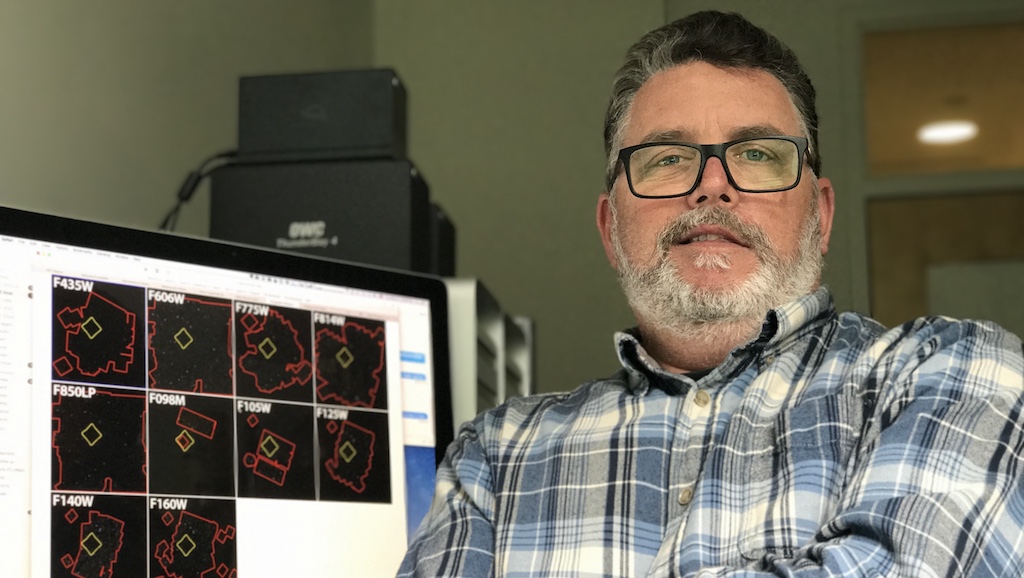
Dan Magee
Dan has been a application programmer at UCSC and University of California Observatories since 1997 working with astronomer Garth Illingworth. He primarily works on data processing pipelines for various instruments on the Hubble Space Telescope (HST) including the Advanced Camera for Surveys (ACS), NICMOS and Wide Field Camera 3 (WFC3).
He currently is a member of the Hubble Legacy Field (HLF) project which combined over thirteen years of Hubble observations covering the Hubble's GOODS-South field.
He was also a member of the Hubble eXtreme Deep Field (XDF) project which combined over ten years of Hubble observations to create the deepest image of the universe and a member of Hubble Ultra Deep Field 2009 (HUDF09) project team. In August 2009 and September 2010 the HUDF09 team use the WFC3/IR camera to take the deepest image ever taken of the universe in the infrared. From 2001 to 2008 he was a member of the ACS GTO team and served as a data analyst and software developer.
more